
What Is the Difference Between Segue and Segway?
Segue and Segway are two words that sound identical but have completely different meanings. They are homophones, which means they are pronounced the same way but spelled differently and have different meanings. Understanding the difference between segue and Segway will help you use them correctly in both writing and speaking.
What Does Segue Mean?
Segue is a verb and a noun that means to move smoothly and naturally from one topic, activity, or piece of music to another. When you segue into something, you transition into it without any abrupt interruption. Segue is commonly used in writing, music, film, and conversation.
Examples of Segue — as a Verb
1- The speaker segued smoothly from one topic to the next.
2- The song segued into a slower and more emotional melody.
3- She segued from talking about her work to discussing her personal life.
4- The film segued from a comedy to a more serious drama in the second half.
5- He segued naturally into his next point without pausing.
Examples of Segue — as a Noun
1- The DJ made a smooth segue between the two songs.
2- His segue from the introduction to the main topic was very natural.
3- The segue between the two scenes was barely noticeable.
4- She made a clever segue from the weather to the topic of climate change.
Common Uses of Segue
1- Smooth segue — a natural and flowing transition
2- Segue into — to move into a new topic or activity smoothly
3- Perfect segue — an ideal and natural transition

What Does Segway Mean?
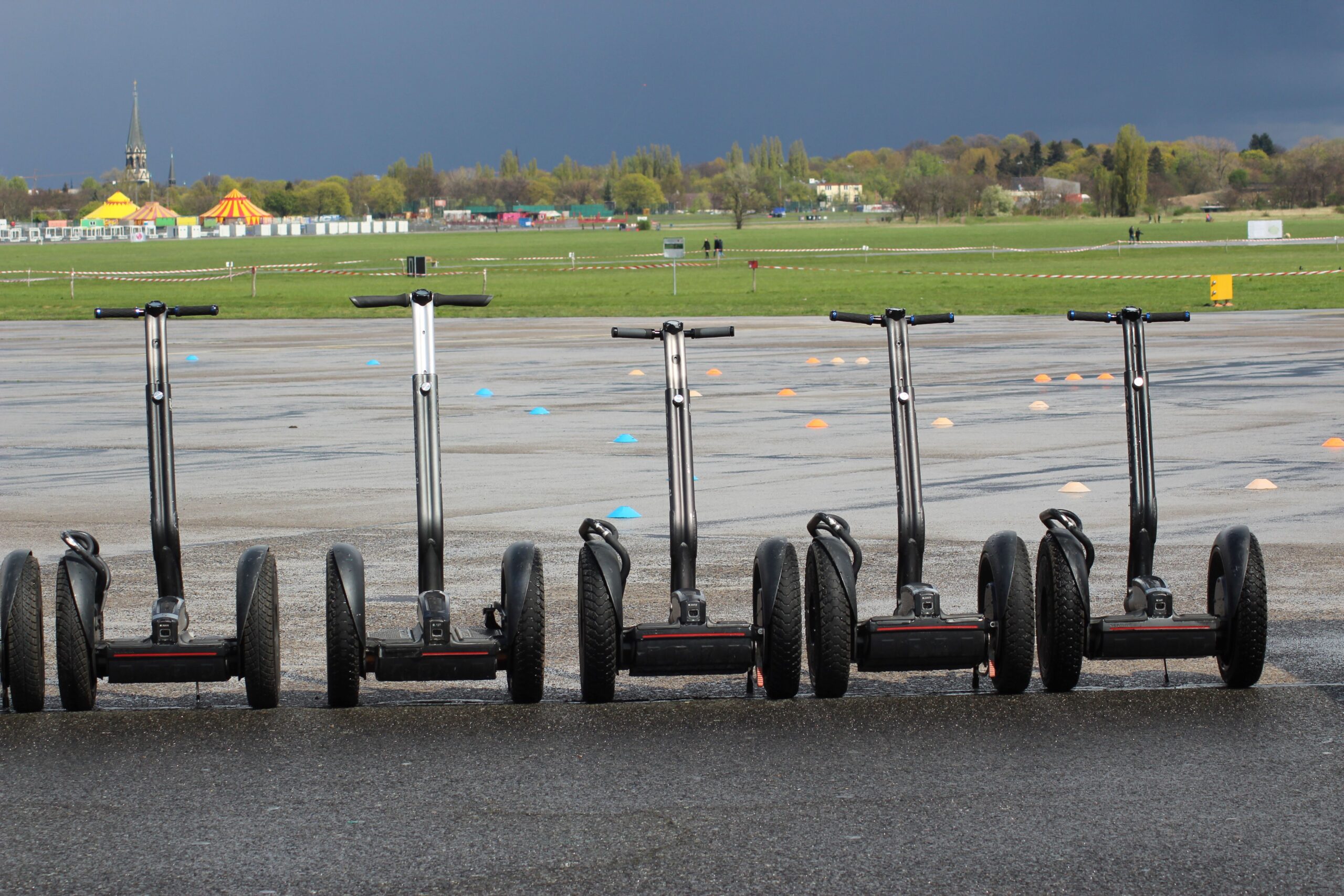
Segway is a proper noun and a brand name. It refers to a two-wheeled self-balancing electric vehicle that a person stands on and rides. Segway is a trademark and should always be written with a capital S.
Examples of Segway
1- He rode a Segway through the city centre on his tour.
2- The security guard patrolled the mall on a Segway.
3- She hired a Segway for the afternoon to explore the waterfront.
4- The Segway tour of the old town was very popular with tourists.
5- He fell off his Segway while trying to turn too quickly.
6- The police officers used Segways to patrol the park.
7- Segway tours have become very popular in many European cities.
Key Differences Between Segue and Segway
Segue
Meaning: to transition smoothly from one thing to another
Type: verb and noun
Example: The presenter segued smoothly into the next topic.
Segway
Meaning: a two-wheeled self-balancing electric vehicle
Type: proper noun (brand name)
Example: He rode a Segway around the park.
Common Mistakes
Using Segway Instead of Segue
Incorrect: She made a great Segway into the next topic.
Correct: She made a great segue into the next topic.
Using Segue Instead of Segway
Incorrect: He rode a segue through the city.
Correct: He rode a Segway through the city.
Memory Tips
SEGUE = Smooth transition (music, speech, writing)
SEGWAY = A vehicle (two wheels, stands on it)
Think of it this way:
Segue = smooth like a sequel in a film (one thing flows into the next)
Segway = a way to travel on two wheels (think of PATHWAY on a Segway)
Conclusion
1- Segue means to move smoothly and naturally from one thing to another.
2- Segway is a brand name for a two-wheeled self-balancing electric vehicle.
3- Segue is used in writing, music, and conversation.
4- Segway is always written with a capital S as it is a proper noun.
5- A simple trick: segue = smooth transition, Segway = a vehicle you ride.